
The routine that protects the body.


Health & Strength
Your body is not a project you finish. It is the thing that has to carry work, people, and ordinary weeks.
You notice it getting out of the car. The back is tight. The stairs at work feel longer than they did a few years ago. Nothing is wrong enough to call a crisis. It is just the quiet result of putting your body last, behind the inbox, the kids' timetable, the bill that needed paying, or the shift that ran long.
A lot of men answer that feeling with a burst. Ten hard days in the gym, a strict food plan, a promise that this time will be different. Then a late week hits, the burst dies, and the body goes back to the end of the list. The problem is rarely a lack of knowledge. Most of us already know that moving and sleeping matter. The problem is a plan that only works when life is calm.
Strength, in the way Iron Compass uses the word, is not a look and it is not a punishment. It is the capacity to do what the day actually asks. Carry the groceries. Stay patient at 9pm. Get up tomorrow without bargaining with your knees. That kind of strength is built in ordinary weeks, not in a highlight.
You do not need a perfect history to start. You need a week you can repeat when you are tired, busy, or both.
Why this matters on a normal Tuesday
The body sits under everything else you care about. When energy is thin, discipline gets brittle. You snap at people you like. You skip the conversation that needed ten calm minutes. You make the short-term choice with food, sleep, and work because the longer choice feels expensive.
Stoic practice is not about ignoring the body or treating pain as a moral test. It is about seeing what you can influence. You cannot control a bad night, a deadline, or a body that is ageing. You can influence whether this week includes a walk, a short session, and a bedtime you actually keep. Reliability starts there. A man who looks after himself is easier to count on.
This is not an argument for living at the gym. A father on nights, a man who travels, and a man who lives alone with a long commute do not have the same week. The standard is the same shape: some strength work, some easy movement, and sleep treated as part of the job rather than a reward you earn after everything else is done.
Neglect is rarely dramatic. It is the month where the only movement was walking to the car. That month does not make you a failure. It does make the next month heavier if you keep pretending you will reset on Monday.
Build a week you can repeat
Pick a floor, not a fantasy. Three short strength sessions and a few walks will beat a programme you abandon. If you can train at home with a kettlebell or a pair of dumbbells, use that. If you have a gym some weeks and not others, write the home version first so a closed gym does not end the habit.
Keep the sessions plain. Push, pull, squat or hinge, and carry something. You do not need a new method every month. Novelty feels like progress and often is not. The man who does the same sensible session for a year, and adds a little weight or a little ease when it gets easy, is the man who is still training next winter.
Put the sessions on the week before the week fills itself. Tuesday before work. Thursday after the school run. Saturday morning before the house wakes up. If one of those slots dies, move it. Do not turn a missed day into a missed month. The point of a floor is that you can touch it on a bad day and still call the week honest.
Walks count. A twenty-minute walk after dinner is not a consolation prize. It is how a lot of men keep their head and their hips in the same week. If you only have time for one thing, walk, then add strength when a slot appears. Waiting for the perfect hour is how the year disappears.

Recovery is part of the work
Training hard and sleeping badly is not toughness. It is borrowing. The debt shows up as a short temper, a sore shoulder you keep poking, and a Sunday where you cannot be bothered to do the thing you said mattered.
Protect a bedtime the way you protect a meeting. You will miss it sometimes. Missing it on purpose four nights a week is a decision, even if you tell yourself it is just how life is. Wind down in a way that is dull on purpose. Phone in another room. Lights down. The same rough time most nights. None of that is glamorous. It is how energy comes back.
Pain is information, not a character test. A muscle that is worked will feel used. A joint that is sharp, swollen, or getting worse through the week is a reason to change the load and, if it persists, to get it looked at. Staying capable for twenty years matters more than proving you can ignore a warning for twenty days.
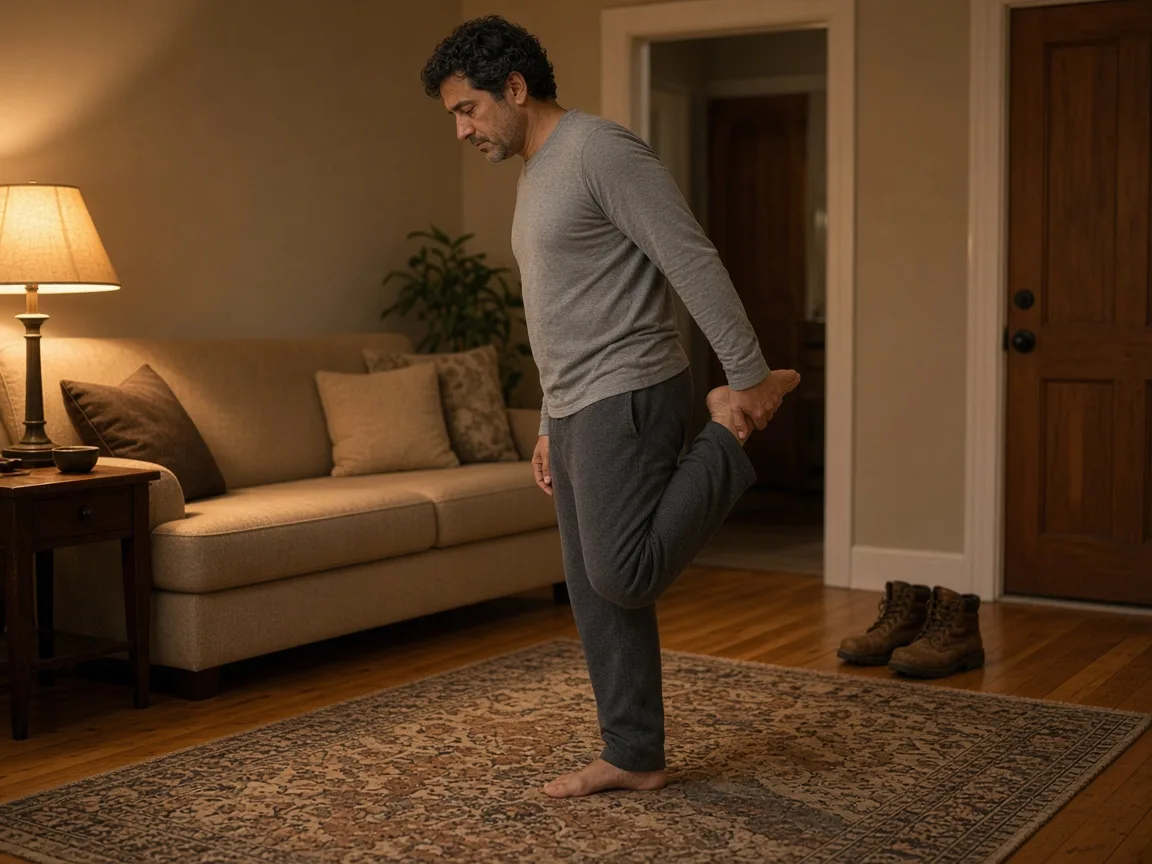
Downshift on purpose. A stretch on the floor after dinner, a slower walk, ten quiet minutes before bed. These are not extras for men who have already won the week. They are how the week stays survivable.
Eat for tomorrow, and keep your joints in the plan
Food is fuel and it is also how you get through an evening without raiding the cupboard because you are empty and irritated. You do not need a moral story about being good or bad. You need enough protein and enough real meals that the 4pm slump does not make every decision for you.
A simple pattern holds up better than a strict one. Breakfast you can repeat. Lunch that is not a negotiation with a servo. Dinner that includes something you would still eat when you are tired. If you drink, notice what it does to the next morning rather than arguing with yourself about whether you deserve it. The question is whether tomorrow's version of you can keep the standard you set.
Strength that wrecks your shoulders is a short career. Warm up enough to move well. Add load slowly. If you are coming back after a layoff, start lighter than your pride wants. Continuity is the result. The man who trains through the year with boring progress will outlast the man who keeps restarting at full noise.
Across a life, the plan has to change. A new baby, a run of night shifts, an injury, a stretch of travel. Lower the floor rather than dropping the idea. Two sessions and daily walking for six weeks is still a man looking after himself. That is the standard other people can feel, even if they never see you train.
What a decent week actually looks like
Picture a man who works days and gets home after six. He is not an athlete. On Monday he walks for twenty minutes after dinner because the couch will take the rest of the night if he sits down first. On Tuesday he does twenty-five minutes at home: a few sets of a squat or a hinge, a push, a pull, and a carry. He stops while the work still feels honest, not when he is wrecked. Wednesday is another walk, or he is on his feet enough at work that he counts it and goes to bed on time instead.
Thursday repeats Tuesday, lighter if the back is talking. Friday he keeps the walk and he does not turn a beer into a reason to skip Saturday. Saturday morning, before the house fills, he does the third session or a longer easy walk if the week was brutal. Sunday he might do nothing structured, and he does not call that failure. He looks at whether the floor happened. If one session died, he does not schedule seven to make up for it.
Food in that week is repetitive on purpose. Eggs or yoghurt in the morning if that is what he will eat. A lunch he can buy or pack without a decision. Dinner with protein and something that is not only bread. He is not weighing every bite. He is avoiding the pattern where he eats nothing useful until 9pm and then makes up for it standing at the fridge.
Sleep is the part he protects worst, so he picks a lights-down time four nights and he puts the phone in the kitchen. He will break it. The point is that the break is visible. When his shoulder niggles, he changes the push for a week instead of proving he can push through. None of this will impress a stranger. It will make him easier to live with by the following month, which is the result that matters.
If your week cannot look like that, steal the shape and change the hours. Night shift means the 'morning' session is whenever you wake. Travel means the hotel-room version of the same movements and a walk you can do in a strange street. The photograph of a perfect programme is not the standard. A week you can describe out loud, and then mostly live, is the standard.
One more thing worth saying plainly. You will compare this week with a younger man, or with a mate who seems to train without effort. Comparison is a poor coach. Your joints, your job, and your sleep are the constraints that matter. Train inside them. If something sharp persists, get it seen rather than collecting opinions from the internet. The aim is still the same: be a man who can be counted on tomorrow, not a man who won an argument about toughness today.
Put it into practice
Five minutes. A pen is enough. You are not designing a new life. You are naming the next week you can actually live.
- Write three times this week when you will move on purpose. Include at least one strength session and one walk. Put them where they fit, not where they look impressive.
- Write the bedtime you will aim for on four nights. If that bedtime is later than you wish, write the real one.
- Circle the session you will still do if Thursday falls apart. That is your floor. Keep it.
Take it further with Iron Compass
The pages here give you the standard. The Iron Compass app is where you keep a training record and see whether the floor held. Open it at ironcompassai.com/app. The five minutes above still work with a pen.
Until that record exists, the journal already has pieces you can use this week: strength when time is short, training without depending on a gym, and keeping energy steady when sleep is thin. Read one. Then do the week you just wrote down.
Keep going
A neighbouring domain, and pieces from the journal you can read today.
A 30-minute strength habit that fits a full week without becoming another project.
Build capacity at home when gym access is inconsistent or nonexistent.
Keep energy stable when sleep is thin and the schedule owns your day.