
The people still in the room.
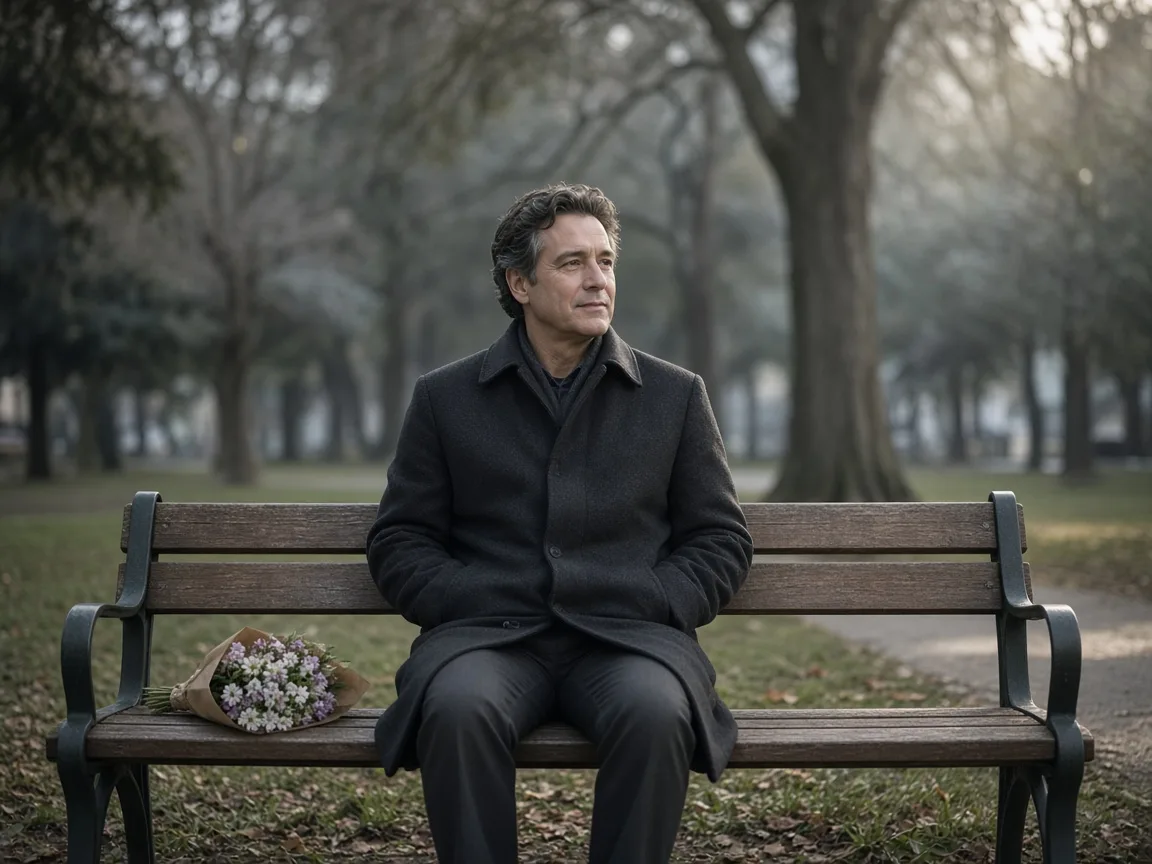

Grief & Honour
Grief is not one feeling, and it is not a test of how tough you are. Honour is what you do with what the loss still asks of you.
Prefer to hear it?
It does not always arrive as tears. Sometimes it is a Tuesday where you are short with everyone and you cannot say why until you remember the date. Sometimes it is a chair, a song, a tool on a bench, a joke you cannot tell the person who would have got it. Sometimes the loss is a death. Sometimes it is a marriage, a job, a friendship, a version of your own life you have had to leave.
Men are often handed two bad options. Fall apart in a way that frightens people, or act as if nothing landed. Both are lonely. You can be steady for the people who need you and still tell the truth that something hurts. Stoicism is not a ban on grief. It is a way of carrying what you cannot change without becoming cruel or absent.
You do not have to grieve on anyone else's timetable. You do have to decide, in small ways, how you will treat the living and how you will remember what mattered.
Why this belongs with the rest of a man's life
Unnamed grief leaks into the domains that look more practical. Sleep goes. Training stops or turns punitive. Money decisions get reckless or frozen. You withdraw from the people who are still here, then feel confirmed that nobody understands. Looking at the loss directly, even briefly, is often kinder than making everyone else decode your mood.
What you cannot control is the fact of the loss and the shape of other people's grief. What you can influence is whether you eat, whether you tell one person the truth, whether you keep a small ritual, and whether you refuse to punish the living for a pain they did not cause.
Honour is the active half. It is how you keep a person's decency alive in the way you behave, or how you refuse to waste what a hard season taught you. It is not a performance at a funeral and then silence for ten years. It can be ordinary. You use his tools carefully. You speak about her without sneering. You do not let the end of a marriage turn you into a man who hates women, or the end of a job turn you into a man who hates work.
If the grief is tangled with depression, panic, or thoughts of harming yourself, this page is not your treatment. Talk to someone qualified, and to someone who loves you, today rather than after you have proved you can handle it. Strength includes that call.
Grief does not have one respectable shape
Some men cry early and then go quiet. Some feel nothing for months and then get ambushed in a supermarket. Some stay busy because stillness is frightening. None of those is a diagnosis. They are patterns. Notice yours without grading it.
Anger is common and it is not proof you are doing grief wrong. Someone left. Someone was careless. The universe was indifferent. You can be angry and still not make a second wreck of the people nearby. Say where the anger is aimed, if you know. If you do not know, say that too, instead of picking a nearby target.
Relief can sit next to sorrow, especially after a long illness or a relationship that had already ended in every way but the paperwork. Relief does not cancel love. It means the nervous system has put something down. You do not owe anyone a single clean emotion.
Other people's grief will not match yours. A child, a sibling, a friend, an ex. They may need a story you are not ready to tell, or they may need you to stop telling it. Ask what they need this week. Do not assume your way of coping is the household rule.

Stay in the room with the living
The people still here need a man who comes back. Not a perfect account of his feelings. A presence. Dinner. The school run. A text that says you are having a rough day and you are still in it. Absence can be necessary for an hour. Absence as a lifestyle teaches everyone else to stop expecting you.
Pick one person you will be honest with. Not a crowd. One. Tell them what the week is actually like. If you do not have that person, this is the week to ask someone steady for a walk, or to sit with a group where men are allowed to say the true thing. You are not weak for needing a witness.
Keep a minimum of care for your body while you are sad. Food. A walk. Sleep that is at least aimed at. Grief is tiring. Using the tiredness as a reason to disappear from your own health makes the next month harder. You are not training for a medal. You are staying available.
Do not ask alcohol, work, or a new romance to do the mourning for you. They can occupy an evening. They do not carry the loss. If a habit is getting heavier each week, name it. A man can grieve and still be responsible for the damage he is about to do.
A small way to honour what mattered
Honour can be a date you keep, a photograph you put where you will see it, a skill you practice because they taught it to you, a donation, a conversation with a child about who someone was. It can also be a decision to live in a way that does not waste the lesson. You become more patient. You stop postponing the visit. You tell the truth earlier.
Write one thing you do not want to lose from the person or the season. A standard. A joke. A way of fixing things. Then write one action this month that keeps it in the world. If the loss was a relationship that harmed you, honour may look different. It may be refusing to repeat what was done to you. That is still a form of respect for your own life.
Anniversaries and ordinary Tuesdays will both ambush you. Plan the anniversary lightly. A walk. A meal. Someone who knows the date. Do not demand that the day be profound. Showing up for it is enough.
You will laugh again at something they would have laughed at. That is not betrayal. It is one of the ways a life continues. Let it happen without a speech. Then go back to the living, who still need the man who remembers.
Getting through a week that has a hole in it
He does not announce a process. On Monday he tells one friend that the week is heavy and that he is still going to work. He asks for a walk on Thursday, not for advice. The friend only has to show up. That is already more witness than he has allowed himself for months. He eats a real meal that night instead of calling toast a dinner, because he has noticed the skipped meals make him sharper with everyone.
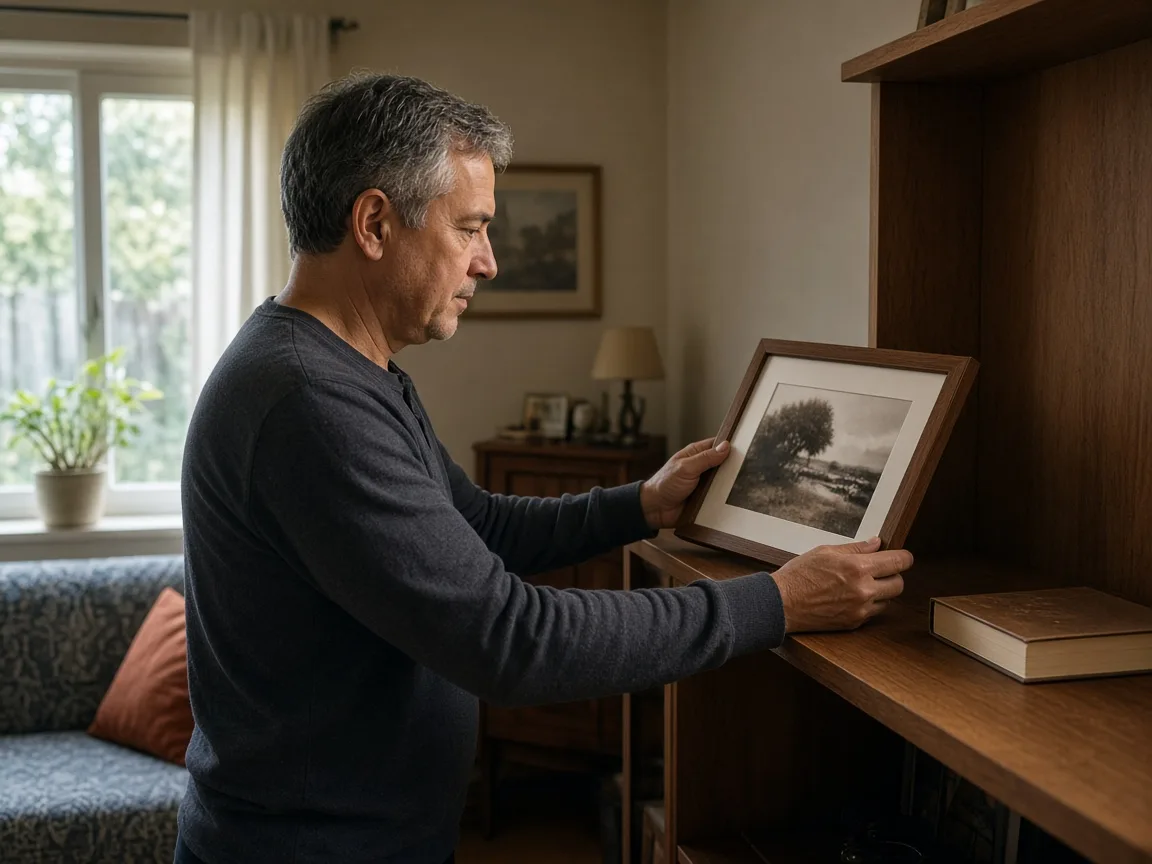
Tuesday he is angry in the car and he does not take it into the house as if the house caused it. He says he is having a rough day. He still does the ordinary jobs. Presence is not the same as pretending to be fine. Wednesday he puts a photograph where he will see it, or he writes the one quality he does not want the loss to erase. If the loss was a marriage or a job rather than a death, he writes the standard he refuses to abandon: he will not bad-mouth the other person to their child, or he will not turn bitterness into his personality at the next workplace.
Thursday's walk happens. He talks for part of it and he is quiet for part of it. Nobody fixes it. Friday he feels almost normal and then guilty about that. He lets the ordinary hour stand. Grief is not disloyal when it loosens for an afternoon. He keeps the bedtime he has been missing, because a wrecked night makes Saturday crueller than it needs to be.
On the weekend he does one act he would call honour if he had to name it. He cooks a meal they liked. He finishes a small job with their tools and puts them back. He sits with a child and tells one true, kind story. Or, if the loss harmed him, he spends the hour on a boundary he has been postponing. He does not drink the feeling into a hole. If he wants a drink, he has it with a limit he set while he was sober.
The next week will not be a copy. Some days will be blank. The repeatable pieces are the ones to keep: one person who knows, one meal, one walk, one small act that says the loss is real and the living still matter. If the blank days start to include thoughts of harming yourself, stop treating this as a private standard and get help the same day. Carrying grief does not mean carrying it alone.
You may also be grieving something people do not bring flowers for. A friendship that went quiet. A body that no longer does what it did. A future you had described out loud. Those count. Give them the same small practice: one true sentence, one person who can hear it, one act that looks after the life you still have. You do not need a public story. You need to not disappear.
Put it into practice
Five minutes. Private. You do not have to show this to anyone.
- Write the name of the loss in a plain sentence. A person, a relationship, a job, a season. If there are several, pick the one that is loudest this week.
- Write one true line about how it is showing up in your days. Anger, numbness, busyness, sadness. No grading.
- Write one small act of honour or care you will do in the next two days. A walk, a call, a meal, a date in the diary, a sentence said out loud to someone living.
Take it further with Iron Compass
A quiet place to mark a hard date, and a simple record you can return to, lives in the Iron Compass app. Open it at ironcompassai.com/app. This page does not ask you to share what you wrote.
The journal has longer pieces on how men often carry grief, and on rebuilding after a loss, if you want them later. They are reading, not treatment. If you are in danger of harming yourself, contact local emergency help or a crisis line now, and tell one person who can sit with you.
Keep going
A neighbouring domain, and pieces from the journal you can read today.
Five long-form guides on grief, loss, identity, and rebuilding for men.
Stabilise, ritualise, and walk forward after loss.
Name the wound, choose the ritual, carry meaning forward.
How to carry pain with strength and clarity — without collapsing or going numb.