
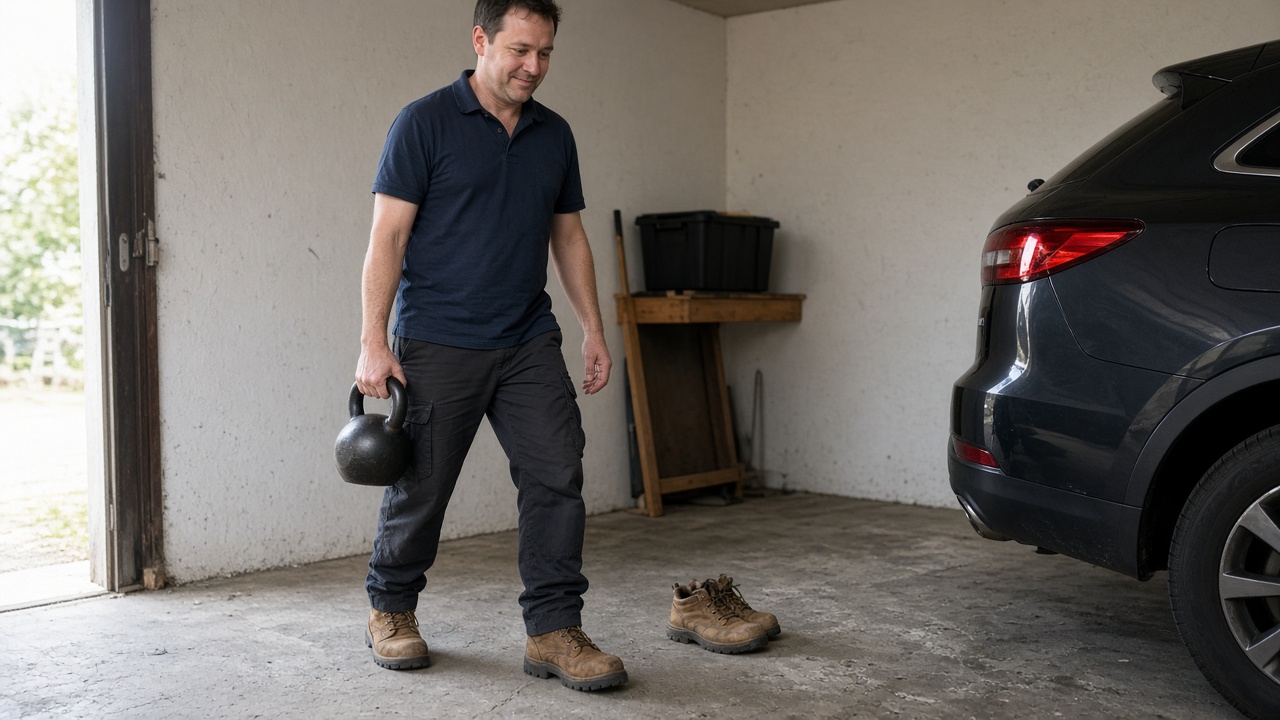

Strength Without Extra Time
Strength is not a separate project you add when life calms down. It is a short, repeatable habit that keeps your body reliable while everything else demands attention.
Why strength matters in a full schedule
Too many strength programs assume you have a block of free time. Most men do not.
Strength without extra time means:
- choosing moves that pay off in posture, load tolerance, and metabolic stability,
- reducing the work required to maintain consistency,
- and using the same movement time as a countermeasure to a demanding week.
When you build strength this way, it stops being an optional add-on and becomes a daily support system.
The value of a small routine
A short routine preserves momentum. It also makes the habit harder to skip.
The key is not volume. The key is regular application of tension and recovery. That is why the routine focuses on full-body moves, a clear sequence, and a weekly progression.
The baseline protocol
The protocol is three sessions per week. Each session is 30 minutes or less.
The structure is:
- 5 minutes mobility and tension setup,
- 20 minutes of compound strength moves,
- 5 minutes of recovery and reset.
This is not about max effort every time. It is about steady work on movement quality, load, and recovery.
Session layout
- Activation and mobility
- hip hinge pattern,
- shoulder stiffness release,
- breathing and bracing setup.
- Primary strength sequence
- one lower-body push/pull,
- one upper-body push/pull,
- one loaded core or grip pattern.
- Reset
- short breathing reset,
- postural cue,
- decision for tomorrow’s first move.
Movement selection
Choose two compound moves and one stability move per session.
Example session A:
- goblet squat or split squat,
- push-up variation or bench press,
- farmer carry or loaded dead bug.
Example session B:
- hinge pattern or trap bar deadlift,
- pull-up progression or row,
- pallof press or suitcase carry.
If you have access to a gym, use the same compound lifts on a consistent schedule. If you are training at home, choose weighted carries, push-ups, and hinge variations.
The six discipline rules
Rule 1: keep the session short
A 30-minute session is easier to protect. It must act like a habit, not a test of will.
Rule 2: train the whole body
Do not separate strength work into isolated categories. The body needs load, stability, and movement in the same session.
Rule 3: make the warm-up purposeful
The warm-up is not fluff. It is the first preparation for your strength standard. If your shoulders are stiff, start with a banded shoulder flow. If your hips are dead, start with a hinge and lunge pattern.
Rule 4: focus on control over intensity
It is more useful to move with control than to chase a heavy number. The right load is one you can handle with good form and purpose.
Rule 5: use the same morning or evening window
Consistency is not about the exact time. It is about the same window of opportunity. If mornings are inconsistent, anchor the session to the same afternoon slot.
Rule 6: track one metric
Track one practical metric each week:
- total load moved,
- session completion rate,
- or number of tension cycles completed.
That is your signal. It is not a body-fat number. It is the quality of the routine.
Recovery and energy habits
Strength without extra time still requires recovery. The goal is not to add another recovery plan; it is to make recovery part of the same routine.
Recovery checklist
- Sleep window scheduled,
- morning hydration,
- protein with the first solid meal,
- two short reset breath sets during the day.
Energy anchors
Use these anchors when the week gets heavy:
- one mobility reset between meetings,
- one standing break after two hours of sitting,
- one breathing reset at the end of the day.
These are not workouts. They are tiny habits that preserve readiness.
Nutrition for minimal routine
A simple nutrition framework supports the routine without extra complexity.
Keep it practical
- protein first at one meal,
- a vegetable or greens component,
- a healthy fat source,
- one hydration check before training.
You do not need a full macro plan. You need consistency in the meals that support the work.
Practical food rules
- If the day is busy, choose a solid protein source at the first major meal.
- Keep a simple snack ready: nuts, cottage cheese, a hard-boiled egg.
- If work spills into the evening, use a light recovery meal with protein and fiber.
Weekly progression
On one day each week, review the routine and adjust one lever.
Weekly review items
- session completion rate,
- movement quality,
- how the body felt during the day,
- whether the session window still works.
Adjust one lever
If the routine is too much, reduce the session from 30 minutes to 20 and improve the movement quality. If the routine is too easy, keep the same structure and add one small load increase.
Do not change the entire training plan. Adjust one small thing and test it for the next week.
Example week
Monday:
- 06:30 — activation, goblet squat, push-up, farmer carry, breathing reset.
- focus on tension and form, not speed.
Wednesday:
- 18:00 — hinge, row, loaded core pattern, posture reset.
- practice the same breathing setup from Monday.
Friday:
- 07:00 — lighter session, mobility, upper body push/pull, walk with load or core tension.
- end with a short hydration and protein check.
The sessions are similar because that is how habits build.
When you are too busy
If you cannot protect 30 minutes, protect 15.
- one compound move,
- one stability move,
- one reset breath.
This keeps the routine alive and avoids the trap of skipping because the session is too long.
Where this fits
This routine supports Strength & Health and the same standards in Discipline & Mindset. Protect the training window like a leadership commitment in Leadership & Character, and tie the anchor to your current mission in Purpose & Direction.
FAQ
How often should I do this routine? Three sessions per week is the recommended baseline. If the week is especially heavy, keep the window and drop to two sessions rather than skip entirely.
What if I do not have equipment? Use bodyweight push-ups, single-leg hinge patterns, loaded carries with a bag, and core tension exercises. The key is tension, control, and the same structural routine.
Can I combine this with another fitness program? Only if the other program does not break the habit. This routine is meant to be the consistent support layer; do not dilute it with too many additional sessions.