
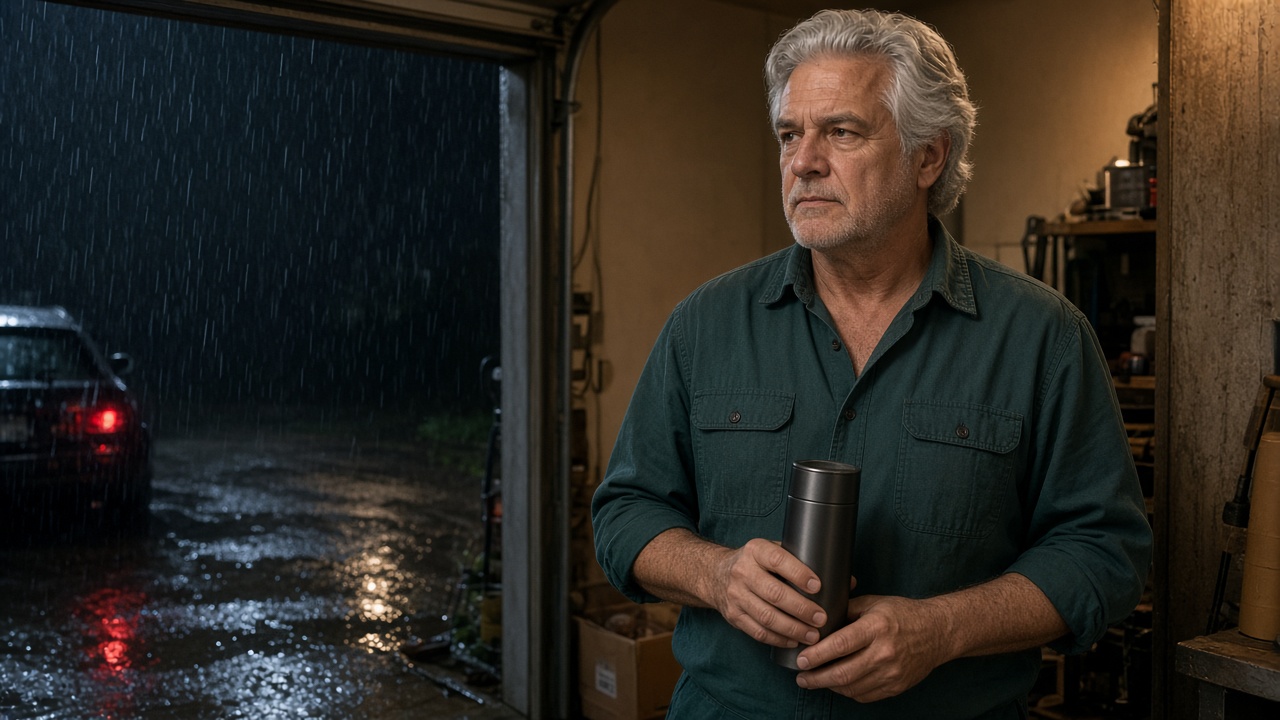

Discipline Under Fire: Holding the Line When Life Tilts
Value promise: You will leave with a ruthless, repeatable protocol to protect your standards when life is loud, unpredictable, or painful.
Related semantic terms: stress inoculation, anchor habits, minimum standard days, chaos routines, discipline resilience
Key Takeaways
- Three-level days (Survive, Standard, Surge) prevent all-or-nothing collapse and keep progress moving during chaos.
- A four-part anchor stack—hydrate, light + movement, plan, check-in—fires even when depleted.
- Prewritten if-then scripts and recovery floors (sleep, protein, steps) make discipline automatic under stress.
Why Discipline Fails Under Pressure
Discipline is easy when life is predictable. The collapse happens when the calendar explodes, sleep drops, a kid gets sick, or a project melts down. Under pressure, working memory shrinks. Emotion and urgency hijack decision quality. You reach for shortcuts, bargains, and comfort. The brain sells the story: "I’ll restart Monday." You don’t need motivation; you need a system that already knows what to do when the storm hits.
The Psychology of Tilt
Tilt happens when cognitive load + emotion exceed capacity. You default to habit. If the habit isn’t scripted, you drift. The fix is pre-committing to a minimum standard before the storm. When you are tired, you run the script instead of negotiating.
Emotion-Driven Decision Traps
- Urgency tunnel: You chase what screams loudest, not what matters.
- Bargaining: "I’ll skip today, double tomorrow" (tomorrow never comes).
- Binary thinking: Perfect day or zero day. No middle ground.
- Narrative collapse: The story shifts from mission to survival, then to guilt.
Build a Three-Level Day: Survive, Standard, Surge
Most men only have two modes: perfect or nothing. Three levels create resilience. They also make progress inevitable because you can always choose the minimum that fits the day.
Survive Day (Floor)
- 1 anchor movement: 10–15 minute walk or mobility
- 1 hydration rule: 20–30 oz water before caffeine
- 1 planning move: 3-line plan written on paper
- Lights-out protected within a 45-minute window
Purpose: prevent total collapse, protect sleep, and keep identity intact.
Standard Day (Default)
- Morning anchor stack (see below)
- One Deep block (60–90 minutes) for your mission-critical work
- One Build block (30–60 minutes) for systems/assets
- Sweep block (30–45 minutes) to close loops and prep tomorrow
- Minimum protein and steps (define your floors)
Purpose: the normal operating rhythm that keeps your life moving.
Surge Day (Selective)
- Two Deep blocks + one Build block
- Extra intensity in training or output
- Only when sleep + energy are ≥7/10 and stakes justify it
Purpose: move faster when the window appears—without breaking recovery.
Anchor Stack That Doesn’t Break
Anchors are the small, repeatable moves you never negotiate. They are deliberately frugal on time so they still fire when you are depleted.
- Hydrate: 20–30 oz water within 10 minutes of waking.
- Light + Movement: 5–10 minutes outside or near a window; walk or mobility while breathing through the nose.
- Plan: Write the three calls only you can make today, and the three tasks AI/admin can handle.
- Check-in: Ask: "Am I on Survive, Standard, or Surge?" Then commit in one sentence.
If you miss the time, you still run the sequence before bed. No zero days.
Narrative Control Under Stress
The story you run in your head determines whether you protect standards. Under stress, replace panic stories with mission language.
- If-Then Scripts: "If travel delays me, then I run Survive day, walk the terminal for 15 minutes, and sleep as soon as I land." Write scripts for travel, sickness, kid chaos, and crunch weeks.
- Mission Frame: Swap "I’m behind" with "I’m a man who protects the floor." State it out loud.
- Micro-commitments: 5-minute start rule: start the Deep block for 5 minutes. Once started, friction disappears.
Proof Over Promises
You do not need more intention; you need receipts. Track only what reinforces identity.
- Daily: check Survive/Standard/Surge, anchors done (Y/N), Deep block done (Y/N), energy 1–5.
- Weekly: review compliance %, biggest leak, one lever to tighten. Change one thing per week—never overhaul.
- Accountability: one truth-telling partner, one scoreboard. Not public performance—private precision.
Recovery as Discipline
Chaos punishes the tired. Recovery is not optional; it is part of the protocol.
- Sleep floor: Guard bedtime, not just wake time. Use a 90-minute wind-down: dim lights, no sugar/alcohol, stretch, write tomorrow’s top 3.
- Nutrition defaults: Pre-commit 2–3 meals; use repeats. Eat protein first; hydrate before caffeine.
- Downshift drills: 4–6 breathing, forward folds, hot shower + cold face rinse. Exit redline before sleep.
Integrate With the Other Domains
- Strength & Health: anchor movement keeps you reliable (Strength & Health).
- Purpose & Direction: discipline needs a target (Purpose & Direction).
- Leadership & Character: your team copies what you do under stress (Leadership & Character).
- Identity & Legacy: your name is built on kept promises (Identity & Legacy).
- Start: Begin here to wire the stack into Iron Compass.
14-Day Discipline Under Fire Sprint
A two-week drill to install the system while life is messy.
Days 1–3: Establish the Floor
- Pick Survive standards (walk, water, 3-line plan, bedtime window).
- Write if-then scripts for travel, sickness, and late nights.
- Log compliance and energy.
Days 4–7: Lock the Stack
- Add the anchor stack every morning (water, light, movement, plan).
- One Deep block daily, even 30 minutes. Phone out of room.
- Nightly 3-line audit: What worked? What broke? What to adjust?
Days 8–10: Add Surge Rules
- Choose two Surge days. Only if sleep ≥7h and energy ≥7/10.
- Run two Deep blocks; protect bedtime harder.
- Add a friction move: block top 3 distracting sites/apps.
Days 11–14: Pressure Test and Reset
- Simulate a chaotic day: shorten Deep to 25 minutes, move it, still run it.
- If you miss an anchor, do it before sleep.
- End with a 30-minute review: keep, cut, or tweak one lever.
Common Failure Patterns and Fixes
All-or-Nothing Collapse
Problem: perfect days or zero days. One miss cascades into a lost week.
Fix: Survive days. Pre-commit to a floor so the identity stays intact.
Travel or Crisis Breaks Routine
Problem: disrupted environment, bad sleep, no equipment.
Fix: portable anchor kit (jump rope, bands, eye mask, earplugs). 10-minute terminal walks. Hotel floor routine. Bedtime window, not bedtime exact.
Evenings Spiral
Problem: doomscrolling, late caffeine, email at midnight.
Fix: 90-minute wind-down block. Phone in another room. "Shutdown complete" phrase. Write tomorrow’s top 3. Herbal tea, stretch, dark room.
Motivation Dependence
Problem: waiting to "feel like it."
Fix: timers and friction. Clothes staged, shoes at door, phone on airplane mode until anchor is done.
Scripts, Checklists, and Prompts
- Morning alignment prompt: "Remind me of my Survive/Standard/Surge choice, today’s three owned decisions, and one anchor I must not skip. Ask me to commit in one sentence."
- Task breakdown: "Break [outcome] into three steps with start/finish definitions and a 25-minute starter move."
- Evening debrief: "List today’s wins/misses, identify the first leak, and propose one tweak for tomorrow. Keep it under 100 words."
Troubleshooting by Signal
- Low sleep (under 6h): Run Survive day. No Surge. Walk + hydrate. Earliest possible bedtime.
- High anxiety: Breath 4–6 for 3 minutes, then write a 3-line plan. Avoid caffeine spike.
- Back-to-back meetings: Protect one 25-minute Deep block. Use headphones + single-tab. Set expectation: "I am heads down 25 minutes, back at [time]."
- Family emergency: Survive floor only. Identity is kept by running the floor. Return to Standard when the acute phase ends.
Example: 10-Day Crisis Protocol
Day-by-day to show how the system flexes when real life hits (travel + sick kid + late nights).
- Day 1 (Travel Delay): Choose Survive. Walk terminals 20 minutes, water 60–80 oz, 3-line plan on paper. Bedtime window honored on landing.
- Day 2 (Client Fire): Standard. One Deep block at 7am before emails. Build block = write root-cause notes. Sleep window protected; alcohol zero.
- Day 3 (Child Sick): Survive. Anchors only. Deep block replaced by 20-minute admin while the child naps. Nap 20 minutes to protect recovery.
- Day 4 (Stacked Meetings): Standard with compressed Deep (30 minutes). Pre-write if-then for meeting overrun. Evening walk to downshift.
- Day 5 (Red-Eye Flight): Survive. Movement in terminal, hydration doubled, caffeine capped before noon. No Surge next day.
- Day 6 (Home, Tired): Survive → Standard hybrid. Deep block 25 minutes after breakfast; Build block moved to evening 20 minutes. Early bed.
- Day 7 (Energy Returns): Standard. Two anchors plus 60-minute Deep. Short lift or 20-minute loaded carry to reassert capability.
- Day 8 (Strong Sleep): Surge. Two Deep blocks. Add a 30-minute review of the week to capture lessons.
- Day 9 (Normal): Standard. Maintain. Do not chase overcompensation.
- Day 10 (Review): 30-minute audit: compliance %, first leak, which if-then scripts worked, what to simplify.
Notice the rule: you never miss the floor, you only earn the right to Surge after sleep normalizes.
The Identity Play
The goal is not compliance for its own sake. It is becoming the man whose standards survive chaos. You are no longer a man who restarts Monday. You are the man who keeps the floor, no matter how loud life gets.
- Decide: "I am the man who protects the floor."
- Prove: run the floor daily for 14 days.
- Install: review weekly, change one lever, never all.
Templates You Can Paste
- 3-Line Plan (morning): Mission call I own today: ____. Deep block window: ____. Friction I will remove: ____.
- If-Then Script (travel): If flight >90 minutes late, I run Survive: terminal walk 20 min, water 20 oz per 90 minutes, plan tomorrow on paper, sleep mask + earplugs.
- If-Then Script (sick kid): If night sleep is under 6h due to kids, run Survive day. Anchors only. Bedtime moved up 30–45 minutes. No caffeine after noon.
- Evening Audit (2 minutes): What worked? What broke first? Which lever will I change tomorrow (one only)?
Case Study: From Collapse to Control
Marcus, 37, project lead with two kids, lost his discipline for six weeks during a product fire. He rebuilt using this protocol:
- Week 1: Survive days only. Anchors + bedtime window. No gym. Energy 2–3/5.
- Week 2: Standard days four times. One Deep block at 6:30am before Slack. Energy 3–4/5. Added nightly wind-down.
- Week 3: Added Surge twice after two nights of 7+ hours. Two Deep blocks those days. Began 14-day sprint tracking compliance.
- Week 4: Compliance 86%. Anxiety down. Reintroduced 20-minute lifts. Sleep steady at 7h. Identified main leak: late phone use. Added phone drop-box at 9pm.
Result: delivered project on time, no relapse, and his kids saw him walk laps while on calls instead of scrolling. Identity shift: "I am the man who protects the floor." Proof beat promises.
FAQs
How do I keep discipline when sleep is low?
Guard the bedtime window, not just wake time. Run Survive day: walk, water, 3-line plan. Skip Surge. Protect the next night’s sleep with a 90-minute wind-down and no late caffeine.
What if my schedule changes daily?
Use the skeleton: AM anchor, one Deep block, PM audit. The skeleton never moves; tasks flex around it. Choose Survive/Standard/Surge each morning and commit in one line.
How do I recover after a bad week?
Do a 30-minute reset: write the misses, identify the first broken anchor, and run three Survive days in a row. Then return to Standard. If-then script the trigger that caused the collapse.
Can I combine Survive and Surge in the same week?
Yes, but never back-to-back. Survive stabilizes you; Surge spends capacity. Alternate: Survive after poor sleep; Surge only after two solid nights and calm nervous system.
Do I need accountability partners?
One is enough. Choose someone who tells the truth and cares about your standard, not your feelings. Share your Survive/Standard/Surge call daily and your weekly lever change.